Showing posts with label dry glass plate. Show all posts

Thursday, October 25, 2012

Glass Negative Victory! (maybe)

Mom & I went to an event at the Greenwich Free Library last night.

K. Walter Grom, former Siena College Professor of German Language, History & Culture, presented a slide show on "General Philip Schuyler's Grand Vision" (i.e. the canal system). Most of the history presented I was familiar with having worked at the Saratoga National Historical Park in 1998, and Schuyler Mansion State Historic Site  in 2000. I knew that Schuyler was instrumental in the implementation of the canal system in NY, however, due to the sloth of the State Legislature (shocking, I know) the Champlain Canal wasn't started until 13 years after Schuyler's death in 1804.

The Champlain Canal, also known as "Schuyler's Ditch," was started in 1817 and completed in 1823. This brought an immense amount of commerce into this agrarian economy. Various businesses began to flourish, like clay works and the Lowber Lime Kiln. Mr. Grom mentioned potatoes and ice, saying that there were ice houses up & down the canal system.

The slides were particularly interesting because many of them were images of Schuylerville in the 1960s, 1970s, and early 1980s. During the slide portion came the surprise. One of his slides was of the Liberty Wallpaper Company building. It was along the canal near current lock 5 just north of Schuylerville. I was so excited to see the facade of one of the images from that stack of glass plate negatives dropped on my proverbial doorstep a few years ago.

Liberty Wallpaper Building? the canal and tow path are to the right

Now to do some research & try to find some information on Liberty Wallpaper!

Thursday, January 19, 2012

Clang, clang, clang went the trolley

I love musicals. Astaire & Rogers. Rogers & Hammerstein... There are few I don't like, though I can't think of one at the moment. Ah well. I love Meet Me in St. Louis with Judy Garland. There are some great songs & some over the top costumes. The Trolley Song is a high point! But, I digress...

I am really talking about actual trolleys. This area had a number of electric trolleys, even Greenwich. On April 8, 1900, the electric trolley began service between the village of Greenwich & Middle Falls. By June 17th the track was complete & service to Schuylerville was available. This also meant a person could ride to Stillwater & Mechanicville. In January 1901 the track to Fort Edward was complete.*

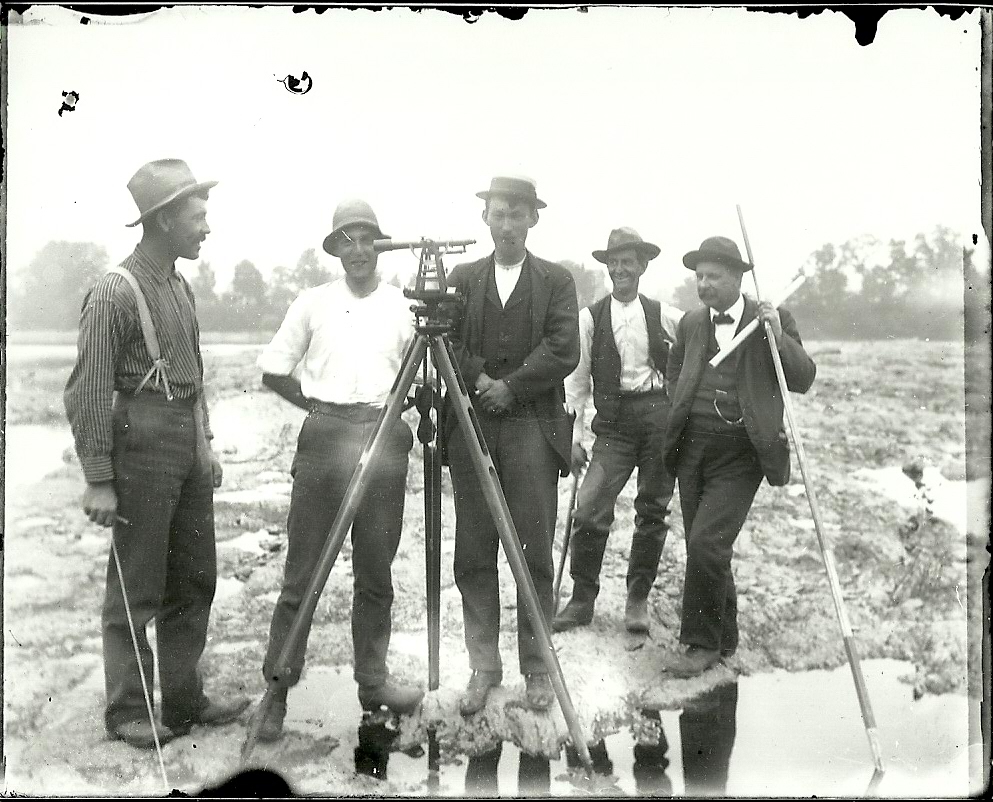
Oh, & those dry glass plates... There is a plate of the trolley. Along with other shots that seem to be of the construction of the trolley line.


Trolley from Greenwich to Schuylerville c. 1900
 This car appears to be the Hudson Valley Railroad car #133 that was, according to David Nestle's book A History of the Hudson Valley Railway, a 15 bench D.T. open car. It was 40' 00" long and sat 75 passengers. These cars were build between 1899-1902.*

building of bridge over the Dionondahowa Falls
 Going over/near the Dionondahowa Falls in an electric trolley must have been quite a sight! A power plant built at this sight harnessed the power of the Battenkill & provided the electricity for the trolley.*


Dionondahowa Falls- Battenkill River
 The postcard below was donated to the Town of Greenwich by Deputy Washington County Historian Loretta Bates.


Hudson Valley Railway car crossing the Battenkill
Oh, what the heck... Here's The Trolley Song for fun!


* Nestle, David F. A History of the Hudson Valley Railway, Greenwich NY: David F. Nestle, 1967.

Wednesday, May 18, 2011

Treasure Trove secure

Last week I asked my mom if she would be willing to come to work with me on my day off. Crazy, I know, but she agreed & we did.

My order of archival materials had arrived from Gaylord, much quicker than expected (Love it!). So, mom & I went to work placing the glass negatives in acid free envelopes, cataloging each one, then placing them upright in an archival box.

Our work station in the hall

Mom looking at one of the large dry glass plates

Folding the edges around the dry glass plate

Almost wrapped

Cataloged and secure in their new home


Now that the 52 dry glass plates are protected, I have to figure out where to store them.Hopefully there is room in the climate controlled vault. Once that is done, I need to find someone to make two sets of prints- one archival & one for research.

Thursday, April 7, 2011

Treasure of dry glass plates

About five years ago, I came into work at the Town of Greenwich offices, expecting the typical slow pace. Maybe have an email or two waiting for me to answer. Maybe a phone call from someone in Ohio or California looking for an ancestor buried in one of the cemeteries. What I found was an amazing donation, just sitting on my cluttered desk. Fifty-two dry glass plates in four disintegrating boxes. Eight of the plates had been developed at some point, & were included.

After a year or so, I was finally able to take the plates to Michael Noonan, a local photographer who has a passion for history & traditional photographic techniques. Michael & I looked them over & decided on a few of the images based on composition and historical detail. He made up contact sheets of the 13 images we selected. Then time got away from me.

While I was getting ready for last weekend's "We Grow History" History Fair at Greenwich High School, I thought about those glass plates & decided to bring them with me. Another local photographer & re-enactor, Cliff Oliver, was there. When I told him what I had with me, his eyes lit up. When I told him I had gloves with me... he got very excited. Between Cliff, and Tim Tefft, an amazing walking encyclopedia of local history, they were able to let me know that many of these images were local. Yay!

Dry glass plates were invented by Richard Leach Maddox in 1871. They replaced the wet glass plates by about 1880 because they didn't have to be treated before exposure & photographers could wait to develop the photographs at a later time. Also, because the dry glass plates were mass produced the silver nitrates in the gelatin emulsion were more consistently distributed allowing for sharper images. They would be commonly used until about 1920. Because the emulsion in these plates is starting to break down chemically, the next step is to spend some of my small yearly budget on some glass negative boxes & four-flap negative enclosures. I finally get to order from the Gaylord catalog! http://www.gaylord.com/adblock.asp?abid=958&search_by=desc&search_for=mr-4f45&mpc=MR&catalog=&target=

Anybody know of a grant that would help me fund the developing of this treasure trove of 52 dry glass plates?